
The 500-Cap Problem Nobody Saw Coming
A promotional distributor lands a 500-piece cap order. The client's logo looks sharp on screen. The proof gets approved. Production starts.
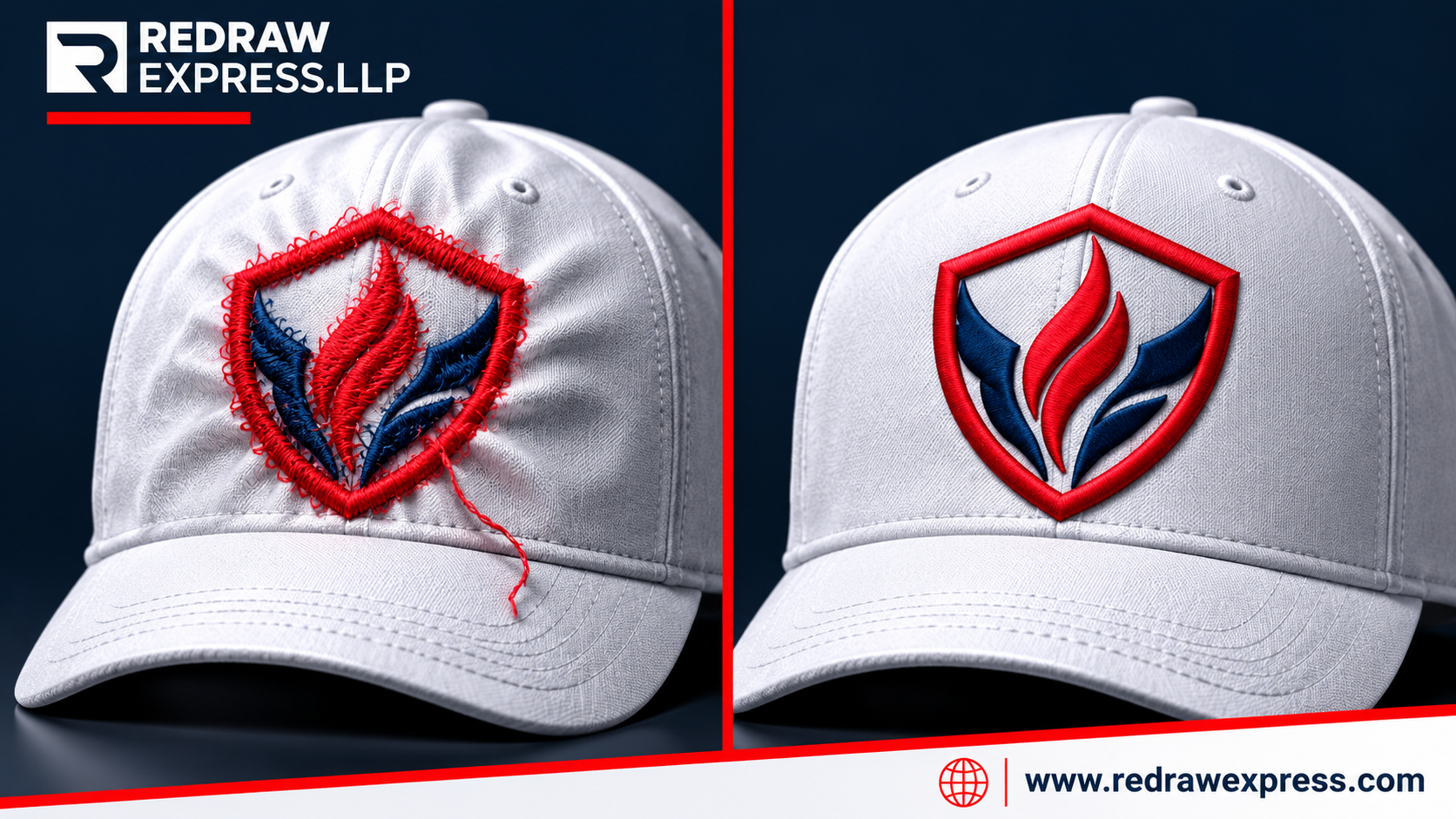
Then the first cap comes off the machine. The letters have filled in. The thin tagline has vanished. The outline wobbles. The thread snaps twice in ten minutes.
The decorator stops the run. The distributor calls the client. Everyone loses a day, and someone absorbs the cost.
The artwork was not the problem. The stitch file was.
That is the quiet truth of embroidery. A machine does not read a logo. It follows instructions. Every stitch, angle, and direction comes from a file someone built. Building that file is Embroidery Digitizing, and it decides whether your order ships on time or starts over.
What Embroidery Digitizing Is (and Why It Decides the Result)
Embroidery Digitizing converts artwork into a stitch file that an embroidery machine can run. The file tells the machine where to stitch, in which direction, how densely, and in what order.
Artwork is not a stitch file
A JPG or PNG holds pixels. A machine needs stitch commands. No software bridges that gap without judgment, so a skilled digitizer makes hundreds of small decisions:
- Which areas get satin, fill, or run stitches
- How dense each stitch should be
- Which direction stitches run to catch the light
- Which underlay keeps the fabric steady
- How to offset the pull of thread on fabric
- Where the machine starts, trims, and changes color
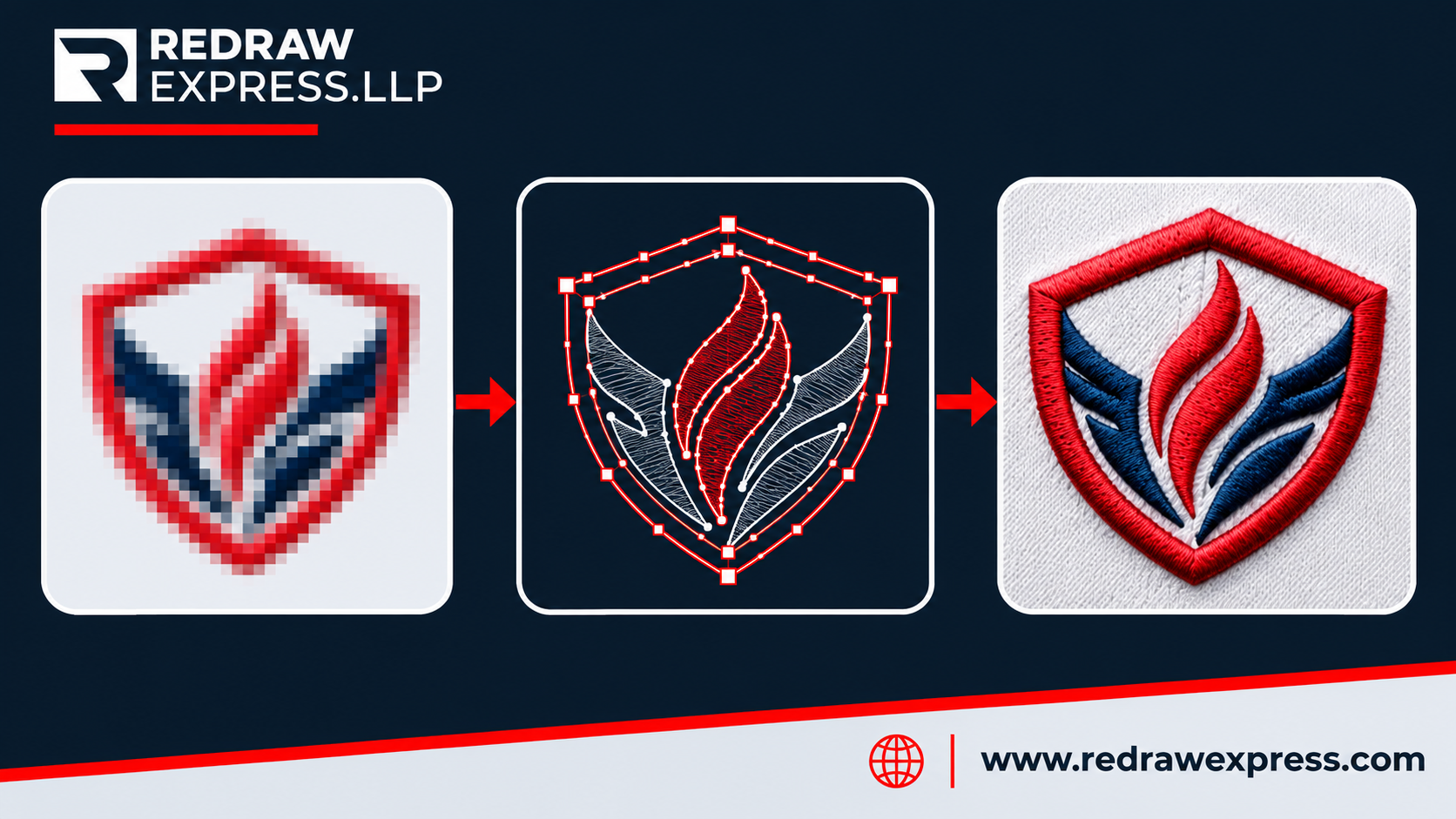
Same logo, different outcome
Two digitizers can start from the same logo and deliver very different files. One runs clean at full speed. The other puffs, puckers, and breaks thread. The machine is identical. The file is not.
Who Needs Embroidery Digitizing Services
Anyone who sells or stitches embroidered goods depends on this step. Each business feels the impact differently.
Promotional product distributors and suppliers
You sell on a promise and a deadline. A weak file threatens both. Reliable Digitizing Services let you quote with confidence, win proof approvals faster, and hand decorators files that run right the first time.
Print shops and screen printers
Embroidery grows your offer without growing your payroll. Many print shops have no digitizer on staff. Outsourcing fills that gap and keeps jobs moving.
Apparel decorators
You protect your machine time. Every failed sample burns hours and thread. Production-ready files cut test runs and rejected garments.
Sign companies
Uniforms and branded apparel often travel with signage orders. Embroidery lets you serve the whole brand, not only the sign.
Embroidery digitizers
Overflow happens. A trusted partner absorbs peak-season volume and complex jobs, so you hold deadlines without hiring.
What Separates Great Digitizing from Average
Good Embroidery Digitizing looks simple on the garment. The skill hides inside the file. Look for these marks of quality:
- Manual digitizing. Auto software guesses. A skilled digitizer reads the artwork and builds each element by hand.
- Smart density. Too many stitches make a stiff, heavy patch. Too few leave gaps. The right density depends on fabric and thread.
- Proper underlay. Underlay anchors the design. It stops stitches from sinking into towels, fleece, and knit polos.
- Pull compensation. Thread tugs fabric as it sews. Compensation keeps circles round and borders aligned.
- Readable small text. Tiny lettering is where weak files fail. A digitizer must rebuild it with care to keep it legible.
- Efficient sequencing. Fewer trims and color changes mean faster runs and a lower cost per piece.
Clean artwork comes first
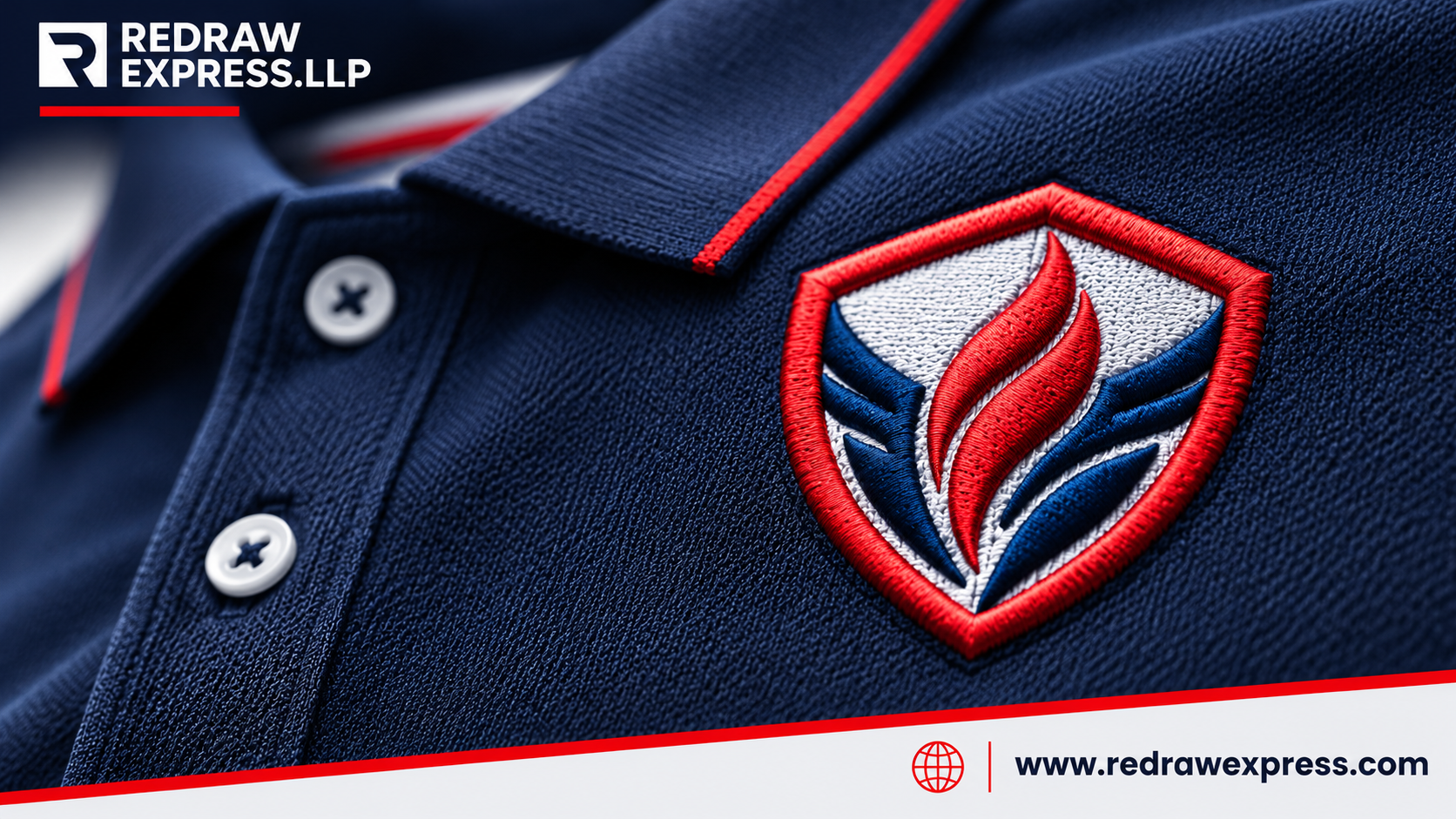
Digitizing performs best when the source art is clean. Blurry or low-resolution logos hide the edges a digitizer needs to see. A Graphic Design Agency that rebuilds the artwork as clean vector gives the digitizer a clear map. That is why vector conversion and digitizing work best together.
Common Mistakes That Cost You Money
Most embroidery failures trace back to a handful of errors.
- Digitizing from a low-quality image. Fuzzy edges become wobbly stitches.
- Ignoring the garment. A file built for a cap fails on a fleece jacket. Fabric, placement, and size change everything.
- Resizing a file without re-digitizing. Large scale changes jam density and bury fine detail. Rebuild the file instead.
- Choosing price over quality. A cheap file that needs rework costs more than a good one.
- Skipping the proof. A proof catches problems before 500 pieces do.
Every one of these mistakes ends the same way: rework. Rework burns thread, garments, machine time, and client trust.
In-House or Outsourced? How to Choose a Partner
Some shops hire a digitizer. Many do not. Salary, software licenses, and training add up, and swings in order volume make staffing hard. Outsourcing turns that fixed cost into a per-job cost.
Questions to ask any digitizing partner
- Do you digitize manually, or rely on auto software?
- Which file formats do you deliver, such as DST?
- Do you check stitch count and density before delivery?
- How do you handle small text and fine detail?
- What happens if a file needs a revision?
- Can you also clean and vectorize my artwork?
What a strong partner delivers
- Production-ready stitch files
- Clear guidance on size and placement limits
- Fast turnaround without cutting quality
- Support for distributors, decorators, and print shops alike
Redraw Express LLP builds its Embroidery Digitizing Services around these standards. Our team digitizes with care, checks every file, and supports clients across the US, Canada, the UK, Australia, and New Zealand. Beyond digitizing, we offer vector conversion, mockups, and pre-press support, so one partner covers the full path from artwork to stitch-out.
Conclusion: Better Files, Better Runs
Embroidery looks like thread. It runs on data. The stitch file sets the quality, speed, and cost of every piece you produce. Strong Embroidery Digitizing protects your margins, your deadlines, and your client relationships.
You can prevent the 500-cap nightmare before it starts. Begin with a file built to run.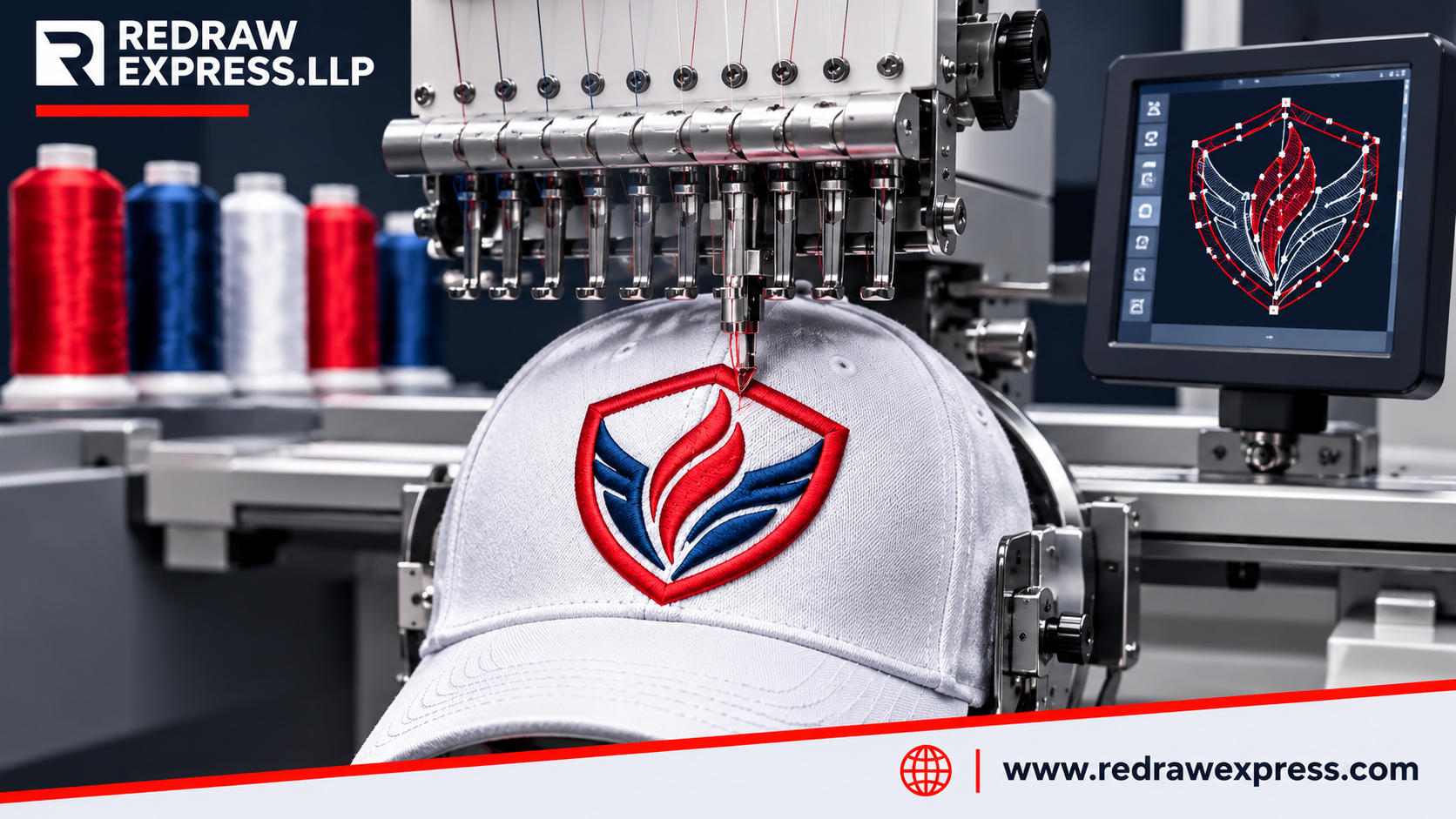
Ready to stitch with confidence?
Send your next logo to Redraw Express LLP. Our Embroidery Digitizing Services turn your artwork into clean, production-ready stitch files, backed by the attention to detail of a full Graphic Design Agency.
Request your quote at redrawexpress.com and see what one good file can do for your next order.